
#1 POLITICS
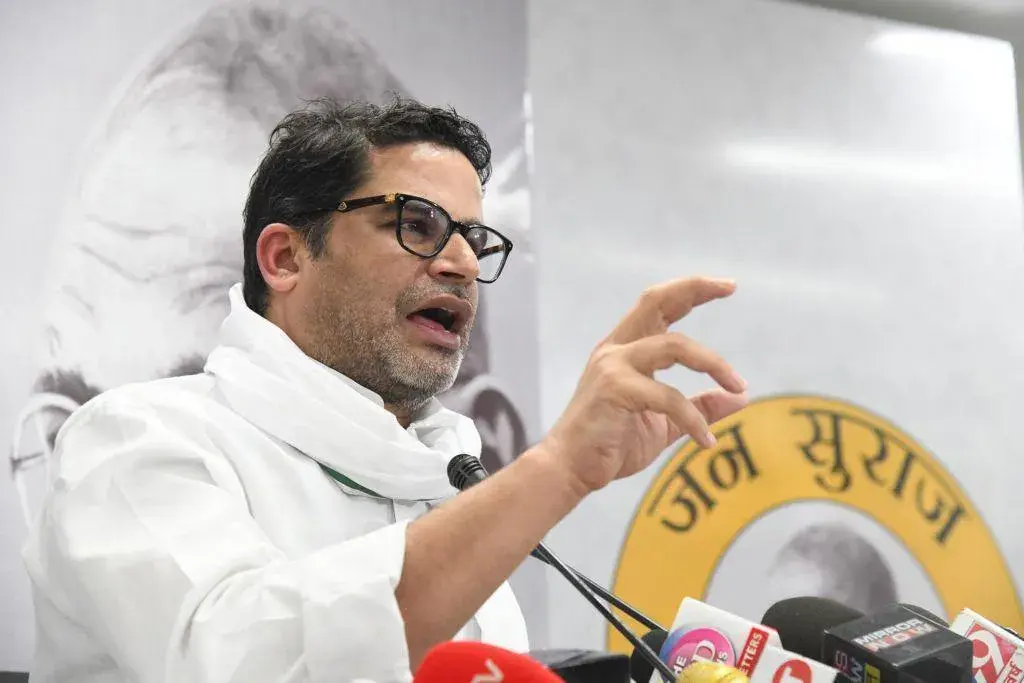
For over a decade, Prashant Kishor was India's backstage magician - the political strategist trusted by everyone from Prime Minister Narendra Modi to powerful regional leaders such as Nitish Kumar and Mamata Banerjee.
But when the 48-year-old finally stepped into the arena himself, the spell snapped.
Kishor launched Jan Suraaj (People's Good Governance) with the swagger of a data-driven political start-up and the promise of breaking the cycle of stagnation in Bihar, India's poorest and third most populous state.
He spent two years walking across the state, built a slick organisation and fielded candidates in almost all 243 seats. The media buzz was huge, but Jan Suraaj failed to win a single seat, scraping only a sliver of the vote, as Modi's BJP-led alliance swept to power.
For all the attention Kishor commanded - often more than established leaders - the party could not convert visibility into votes. In India's febrile and deeply divided political marketplace, his debut, many believe, stands as a cautionary tale: breaking into the system is far harder than diagnosing its flaws from the outside.
The modern history of Indian politics bears this out.
Since the rise of the regional Telugu Desam Party (TDP) in 1983, very few new parties have crossed the threshold of relevance. Those that have - from West Bengal's Trinamool Congress to Odisha's Biju Janata Dal - were breakaway factions of major parties, anchored in existing social bases.
Others, like Assam's Asom Gana Parishad (AGP) in 1985 or Delhi's Aam Aadmi Party (AAP) decades later, rode on the back of mass mobilisation and political crises. Kishor's Jan Suraaj had neither. It was not born of a street movement, nor did it emerge into a moment of anti-incumbent fury. Despite its many problems, Bihar in 2025 appeared to be largely content with the status quo.
"There was no anti-incumbency wave - voters largely stuck to established political and social loyalties. Without a visible crisis or widespread dissatisfaction, Kishor's party never appeared a credible alternative, despite hard work and mobilisation," says Rahul Verma, a political scientist.
Jan Suraaj's debut in Bihar also contrasted sharply with most new Indian parties.
While parties like the AGP, TDP and AAP grew from "socio-political movements that already had deep emotional and grassroots resonance", and AAP was born from a mass anti-corruption movement, Jan Suraaj was conceived as "more of an intellectual and strategic project" - a strategy-driven initiative to fill what Kishor called a "political vacuum", says Saurabh Raj of the Delhi-based Indian School of Democracy.
https://www.bbc.com/news/articles/cz7p5xn8qjpo


Comments (0)